

Intelligent Concrete water Permeability Test Apparatus
Intelligent Concrete water Permeability Test Apparatus
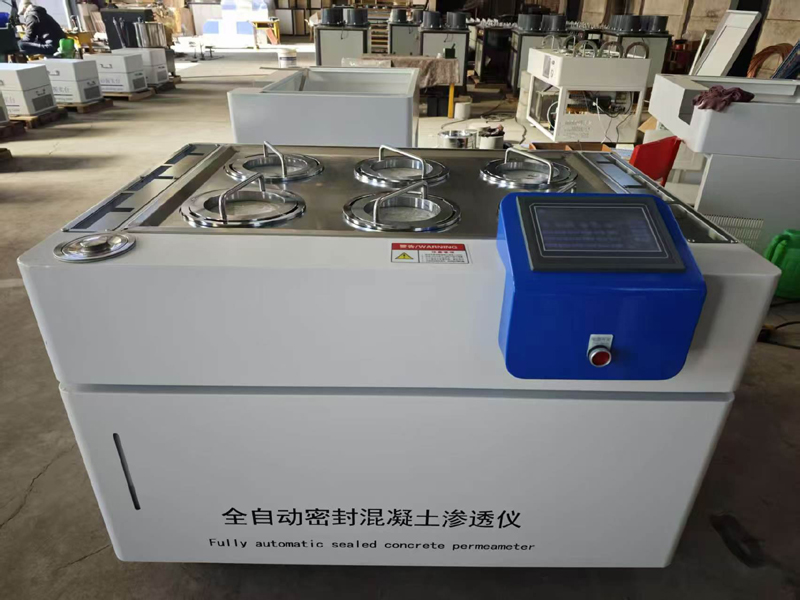
Concrete water permeability tester not only solves the problems of the traditional concrete impermeability tester, such as cumbersome operation, low efficiency, and poor sealing effect during the test process, but also improves the detection efficiency and accuracy, and provides a strong guarantee for the detection of the impermeability of concrete.
Concrete water permeability tester can achieve accurate detection of the impermeability of concrete.
Technical Parameters
1.Maximum test pressure: ≥2MPa
2.Test pressure resolution: 0.001MPa
3.Test force holding error: 0.02MPa
4.Plunger pump flow rate: 0.1L/min
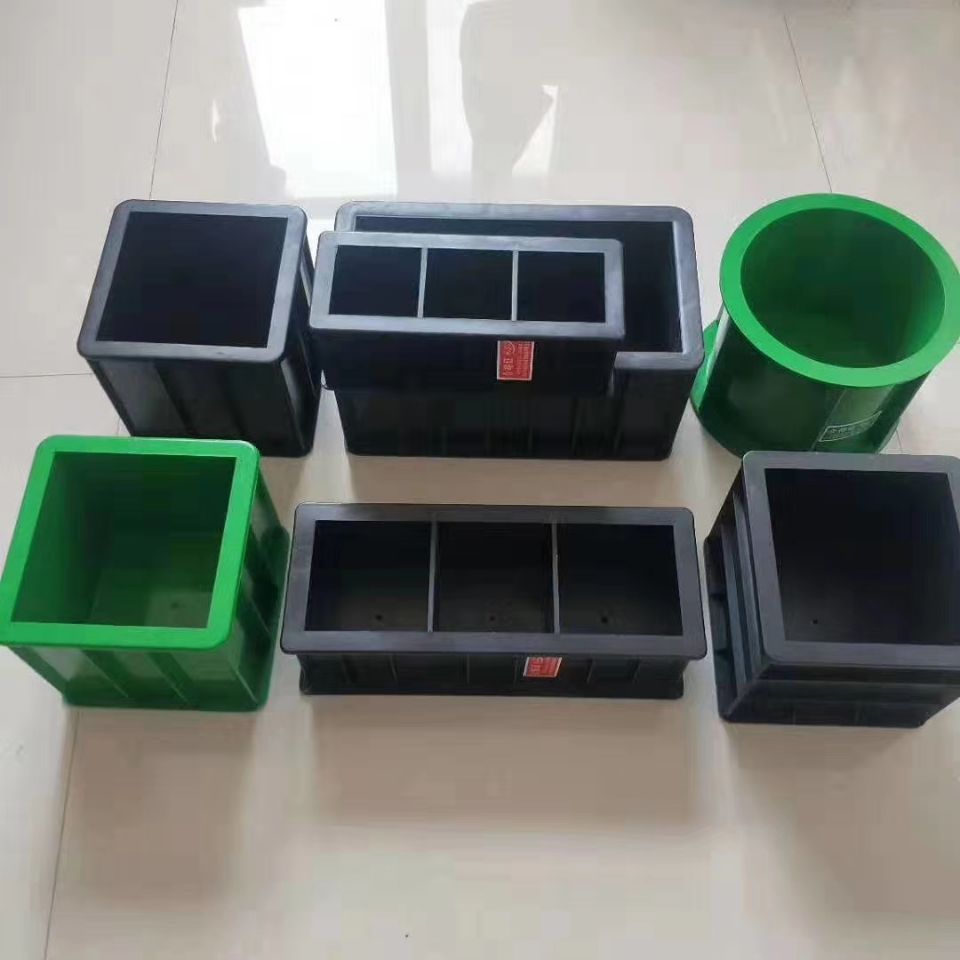
5.Applicable specimen size: φ175*φ185*H150mm
6.Specimen sealing method: Gas sealing, six molds are sealed simultaneously
7.Working mode: One – key start, automatic test throughout the process, automatic sealing, automatic pressurization, automatic constant pressure, automatic stop and automatic pressure relief after the test is completed
8.Host dimensions: Length 1100mm, width 750mm, height 800mm
9.Power supply power: 220V, 500W
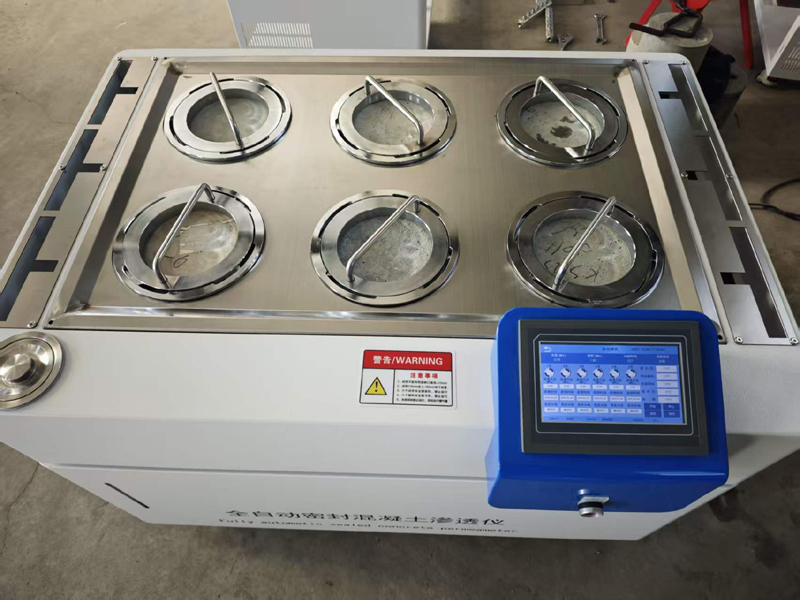
Standard: EN 12390-8, DIN 1048
Concrete Impermeability Apparatus:
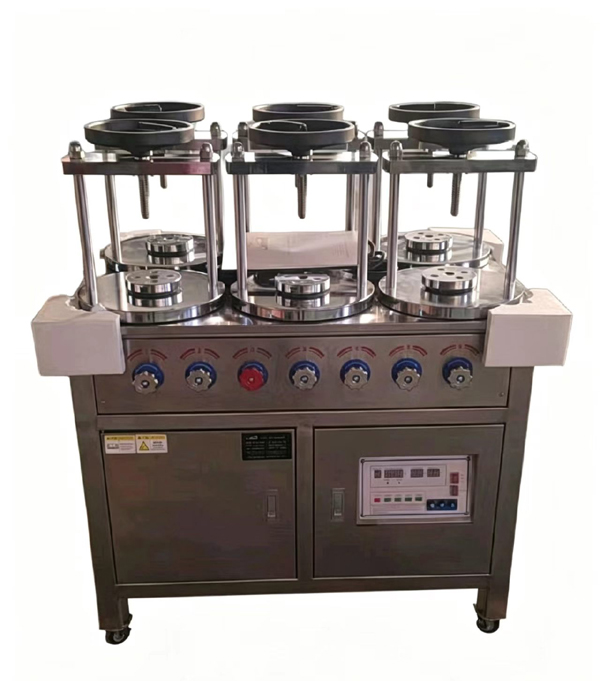
Standard: EN 12390-8, DIN 1048
Concrete Impermeability Apparatus
Concrete Impermeability Apparatus is used to determine the permeability of concrete by measuring the depth of water under pressure penetrating concrete specimens and its ability to resist the penetration of water or other fluids. This result provides the durability and lifespan of concrete structures.
Concrete Impermeability Apparatus consists of a chamber where the concrete sample is placed, and pressure is applied to force water or other fluids through the concrete. The unit accepts concrete cubic, cylindrical, or prismatic specimens having dimensions . The specimen is placed between the quick clamping chamber and the special circular gaskets. The water is under controlled pressure by a fully automatic digital control panel with a high-precision pressure transducer for fined and precision pressure control. The water penetrated is measured by splitting the specimen into half. By measuring the rate or amount of fluid that penetrates the concrete, engineers can assess its impermeability, which is an important factor in determining the durability and lifespan of concrete structures.
The unit comes with standard 6-piece test chambers. Supplied with built air pressure compression and water tank.
Features of Digimatic Concrete Impermeability Apparatus
Quick Clamping System which facilitates easy and secure placement of specimens between chambers with special circular gaskets.
A fully automatic digital control panel ensures fine and precise pressure control during testing.
High-precision Pressure Transducer that enables accurate measurement and control of water pressure.
Efficient Water Penetration Measurement by splitting the specimen into halves after testing.
Comes with standard six test chambers for conducting multiple tests simultaneously.
Integrated Air Pressure Compression.
Supplied with Water Tank.
Standard: EN 12390-8, DIN 1048
EN 12390-8
This standardized method is for evaluating the effectiveness of hardened concrete when it endures water pressure. The test involves subjecting concrete samples to controlled water pressure for a set duration and it evaluates how well they resist penetration. After exposure, the specimens are split open to measure the depth of water penetration. Ultimately. EN 12390-8 safeguards the structural integrity of concrete by providing assurance of its ability to withstand water challenges, thus upholding safety and performance standards in construction projects.
DIN 1048
This standard is a crucial procedure used to determine the water permeability of hardened concrete. Its primary objective is to assess how effectively concrete resists water penetration, a crucial factor in evaluating its durability for construction applications. The testing procedure achieves its goal by subjecting standardized concrete specimens to controlled water pressure, replicating real-world conditions like heavy rainfall or groundwater pressure. The duration of the test varies based on the concrete type and intended application, ensuring comprehensive evaluation. Following exposure to water pressure, engineers meticulously measure the rate of water permeability through the specimens. Lower permeability rates indicate better resistance, signifying higher durability and suitability for construction. Ultimately, DIN 1048 ensures standardized testing methods to uphold quality and durability standards in concrete structures across construction projects.
Test Procedure of Concrete Impermeability Apparatus
Sample Preparation: Prepare the concrete specimens according to the standard procedures, ensuring they represent the material used in the structure.
Conditioning: The samples are subjected to specific temperature and humidity conditions for a set period to ensure they reflect real-world scenarios.
Testing Setup: Set up the Concrete Impermeability Apparatus according to the manufacturer’s instructions. Ensure that all connections are secure and that the apparatus is calibrated correctly.
Sample Placement: Concrete samples are securely positioned within the apparatus, ensuring no leakage occurs during testing.
Pressure Application: Pressure is applied to the samples using the apparatus. The pressure simulates the conditions the concrete would face in real-world applications, such as water pressure in a water-retaining structure.
Digital Monitoring: Using advanced Digimatic technology, the apparatus digitally monitors and records permeability measurements, including pressure levels and flow rates.
Data Analysis: Analyse the data collected from the test to determine the permeability characteristics of the concrete. This analysis may involve comparing the results to established standards or specifications to assess the concrete’s suitability for its intended application.
Reporting: Test results, including equipment used and testing conditions, are documented for future reference and comparison.
Quality Assurance: Perform any necessary quality control checks on the test to ensure test accuracy and reliability, which may involve repeating tests or conducting additional analyses as needed.
Interpretation: Results are interpreted within the context of project requirements, guiding decisions on concrete suitability and potential areas for improvement in construction practices or concrete mixes.